The Accord
How to Scent Your Space
The art of men's interior fragrancing
By an Emissary of the Accord
Published July 25, 2026 · 2 min read
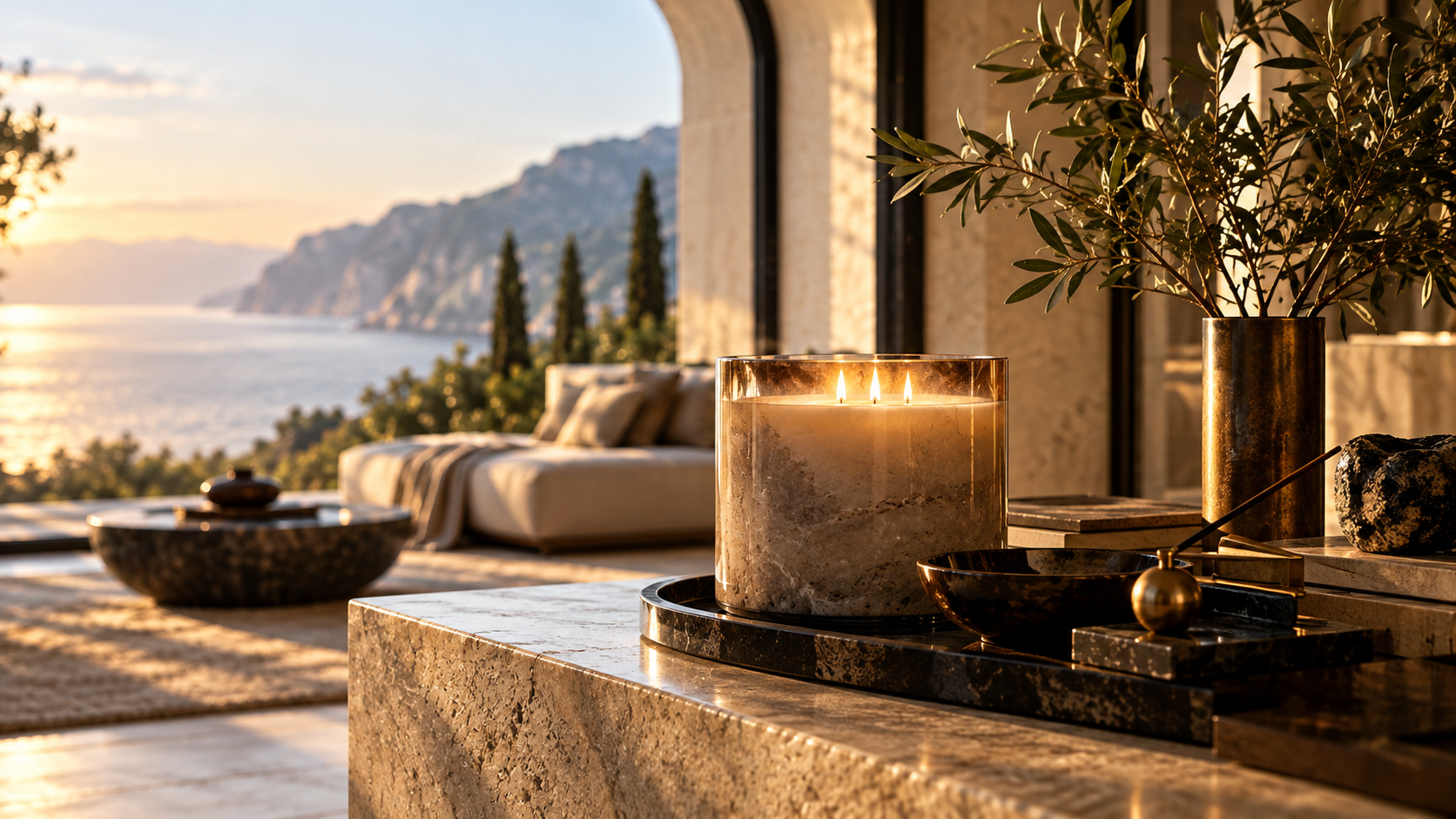
Understanding the Role of Fragrance in Interior Design
Scent is not a finishing touch — it is a design decision. The right fragrance gives a room character before a guest reads a single object in it, and it does work light and material can't: memory, mood, association. Choosing one is not about a favorite smell; it's about understanding what a room is for.
Fragrance ranges from deep, woody registers to brighter, more invigorating ones. The right choice doesn't just smell good — it governs how a space is experienced, the same way any other atmospheric decision does.
Choosing the Right Scent for Each Room
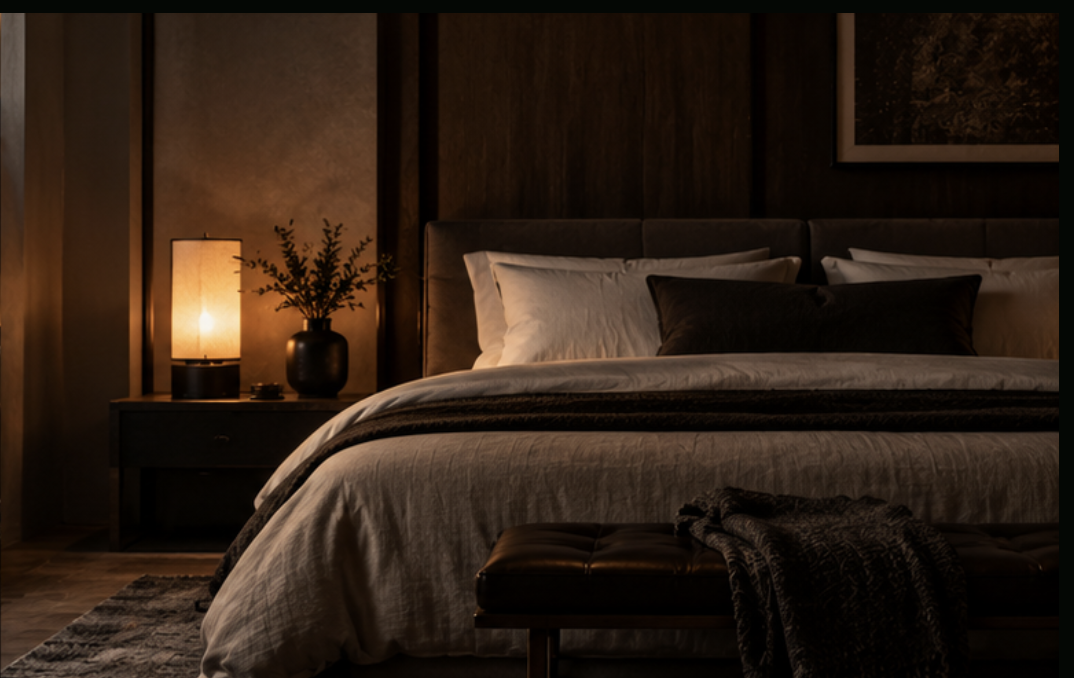
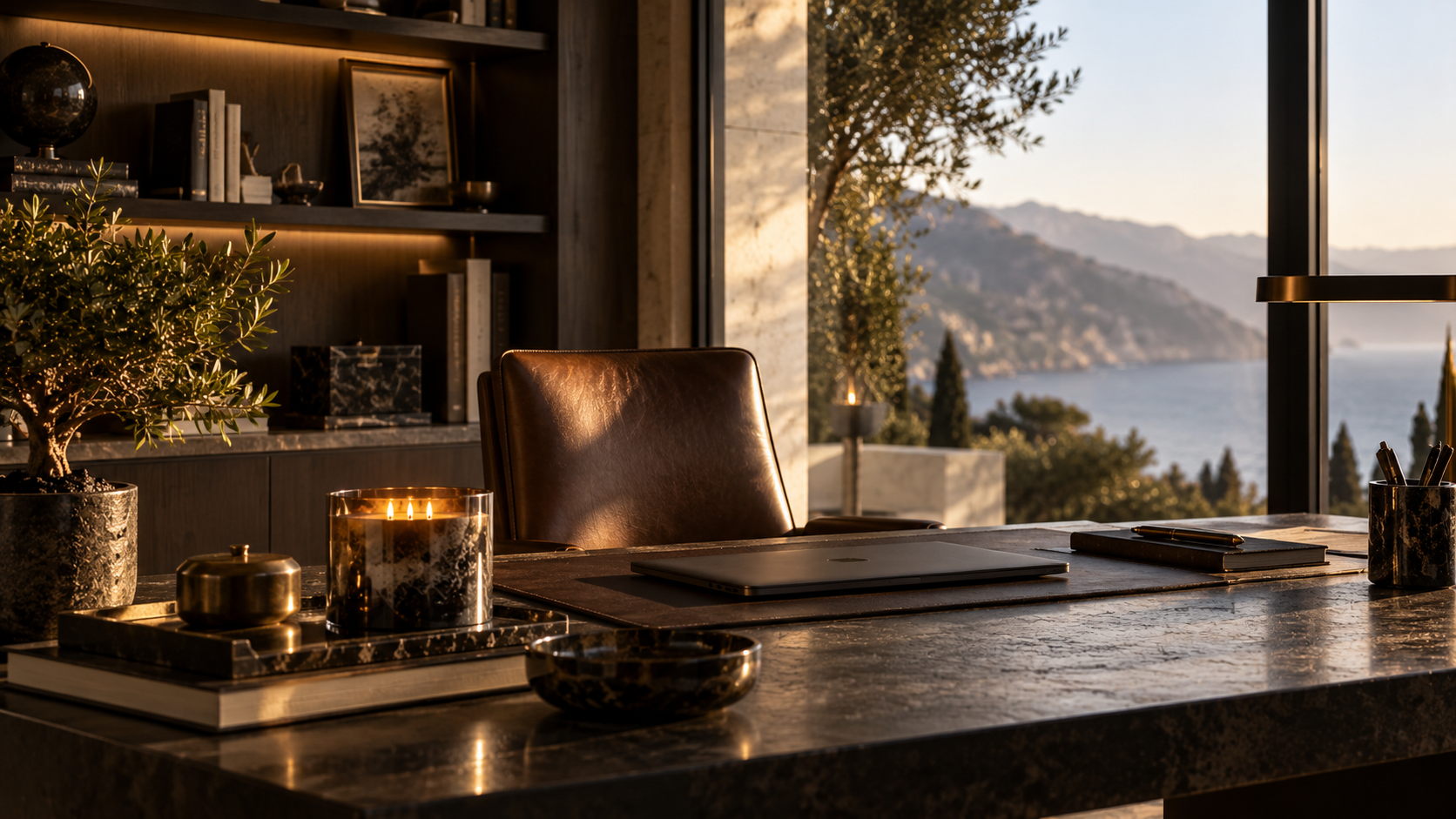
A room's purpose should decide its fragrance, the same way it decides its furniture. Living spaces ask for warmth — sandalwood, cedar, and other grounding, inviting notes. Rest spaces ask for calm — lavender, vanilla, and other notes that lower a room's register rather than raise it. Work spaces ask for clarity — citrus, peppermint, and other notes that sharpen focus instead of relaxing it.
Matched deliberately, fragrance becomes part of a room's function, not just its mood.
Methods of Delivery
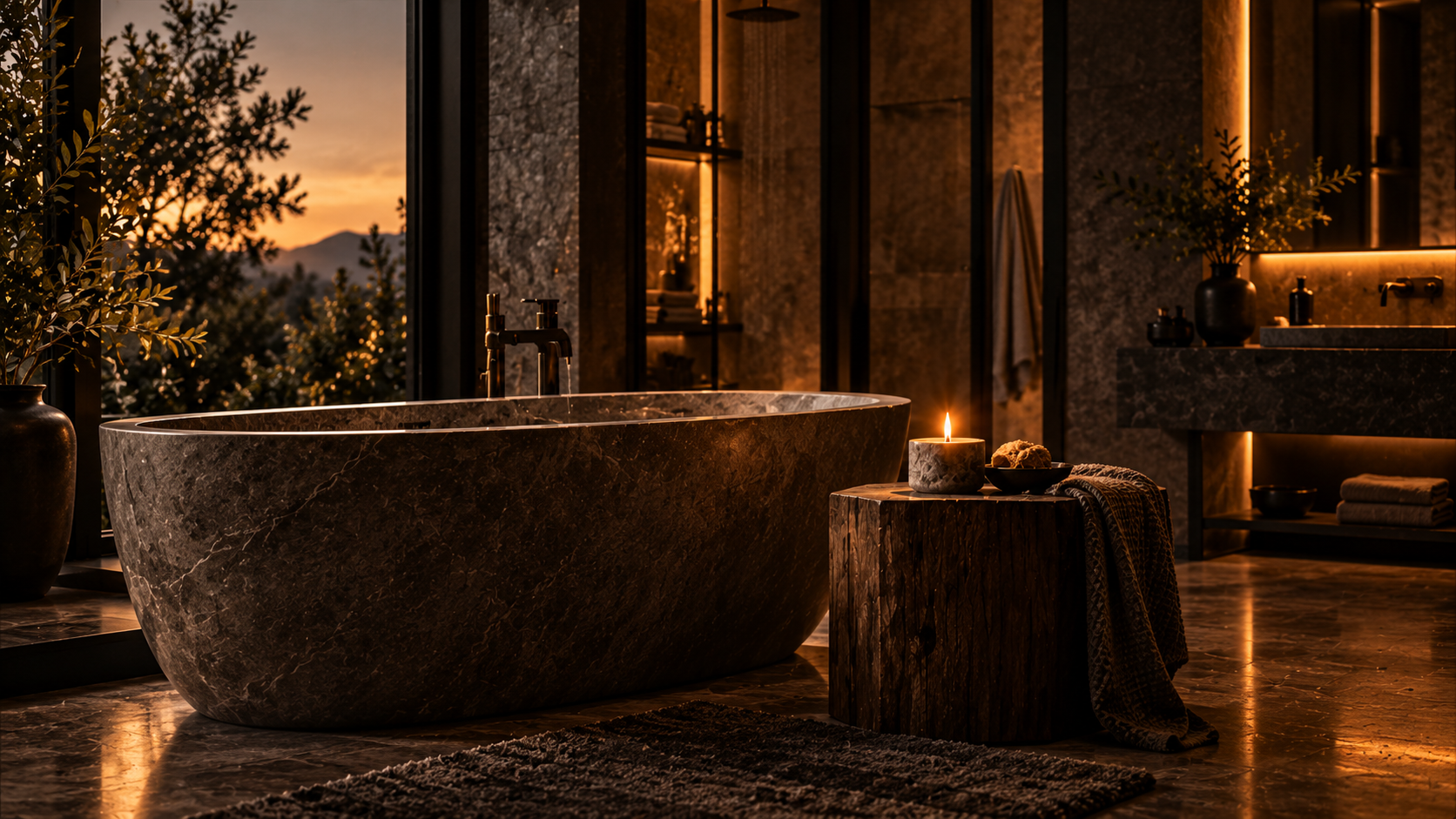
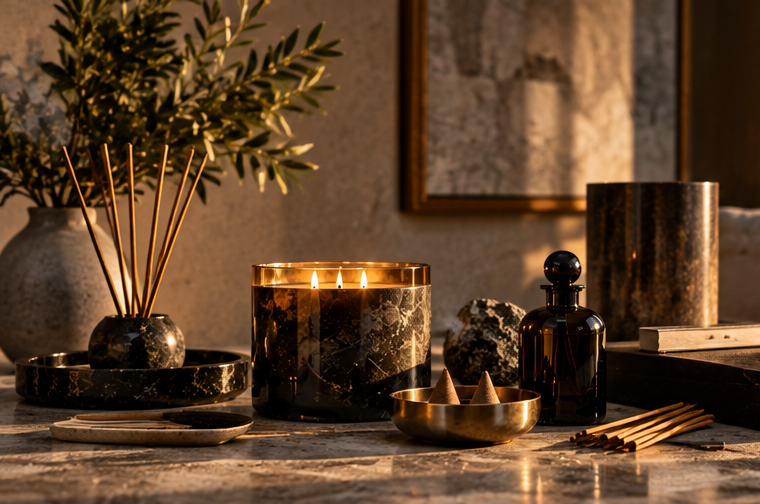
Three methods carry a fragrance into a room, each with its own character. Diffusers deliver a consistent, controlled presence — the quiet, always-on option. Candles add fragrance and light together, the most atmospheric of the three. Incense delivers the most intense, immediate presence — best used deliberately, not constantly.
The method is as much a design choice as the scent itself.
Layering a Scent Profile
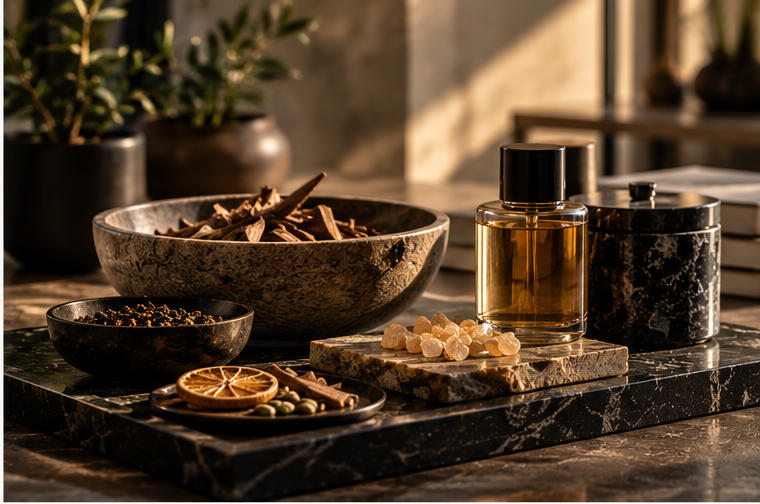
A room's fragrance can be built the same way a cologne is: in layers. A base note — amber, leather — anchors it. A middle note — patchouli, vetiver — gives it body. A top note — bergamot, rosemary — gives it lift. Together, they read as considered rather than singular.
This is where a fragrance stops being generic and starts being specific to the room, and to the person who governs it.
Maintaining the Effect
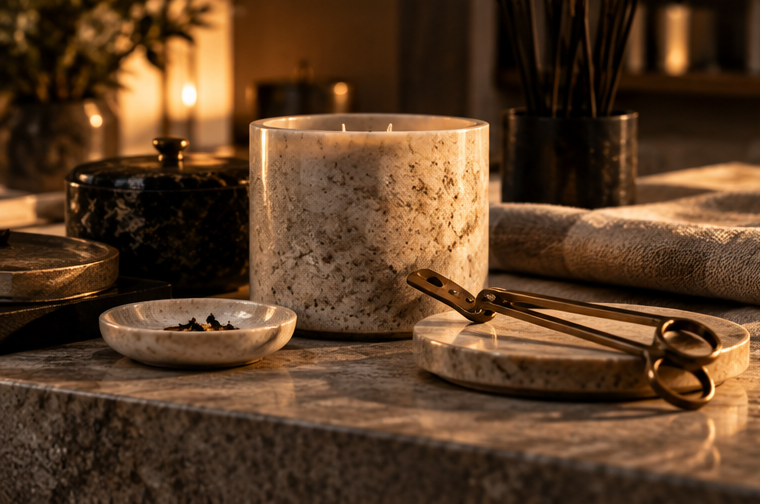
A fragrance system needs upkeep to stay consistent: diffusers cleaned and refilled, candle wicks trimmed, incense stored properly so it keeps its strength. None of this is difficult — it's discipline, the same restraint that governs every other decision in the room.
Conclusion
Scenting a space well comes down to the same discipline as everything else in it: understand the room, choose deliberately, apply with intention, and maintain what you build. Done well, fragrance is not decoration — it's one more instrument in how a space is governed, and how it's remembered.

Continue inside The Inner Circle.
A private connection to HVN Global for those who believe atmosphere, environment, and intentional objects shape how a life is experienced.
Request Access